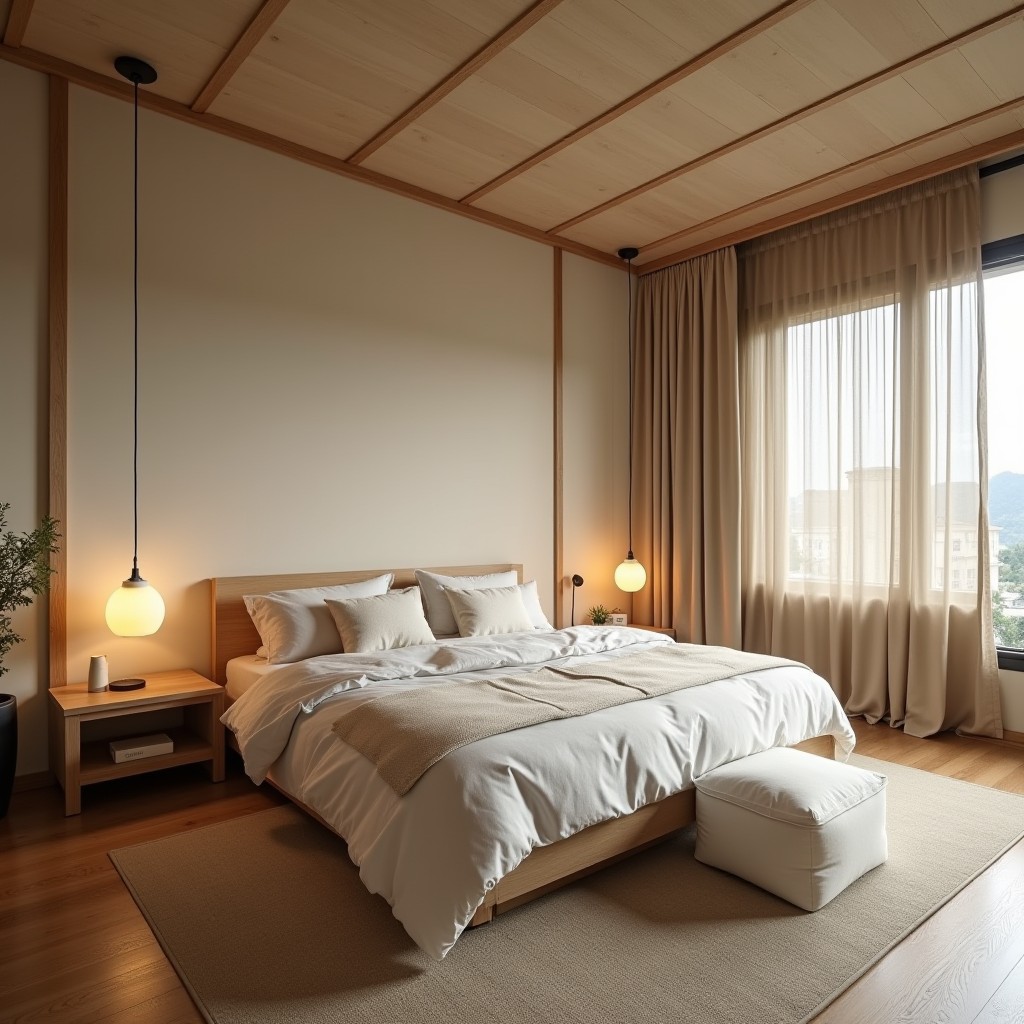
The Japandi bedroom has become one of today’s most loved interior styles, and it’s easy to see why. It combines the calm simplicity of Japanese design with the cozy warmth of Scandinavian living. The look feels natural and uncluttered, with soft colors, clean lines, and organic textures that instantly bring a sense of peace.
The best part is that you don’t need to spend a fortune to create this style at home. With the right choices in furniture, walls, and layout, you can design a bedroom that feels luxurious but still stays within a real-world budget.
Japandi Bedroom Ideas: The Foundation of Calm
A Japandi bedroom starts with the basics: light, space, and natural texture. Instead of filling the room with lots of furniture and decor, the style focuses on just a few pieces, chosen with care. Neutral colors like beige, cream, and grey set the mood, while natural materials such as wood, linen, and stone add warmth and character.
The key is balance. A smooth plaster wall looks richer when paired with a woven rug. A simple oak bed feels softer when dressed with linen sheets. A single plant in a clay pot brings life to the room without creating clutter. Together, these touches create a bedroom that feels calm, inviting, and timeless.
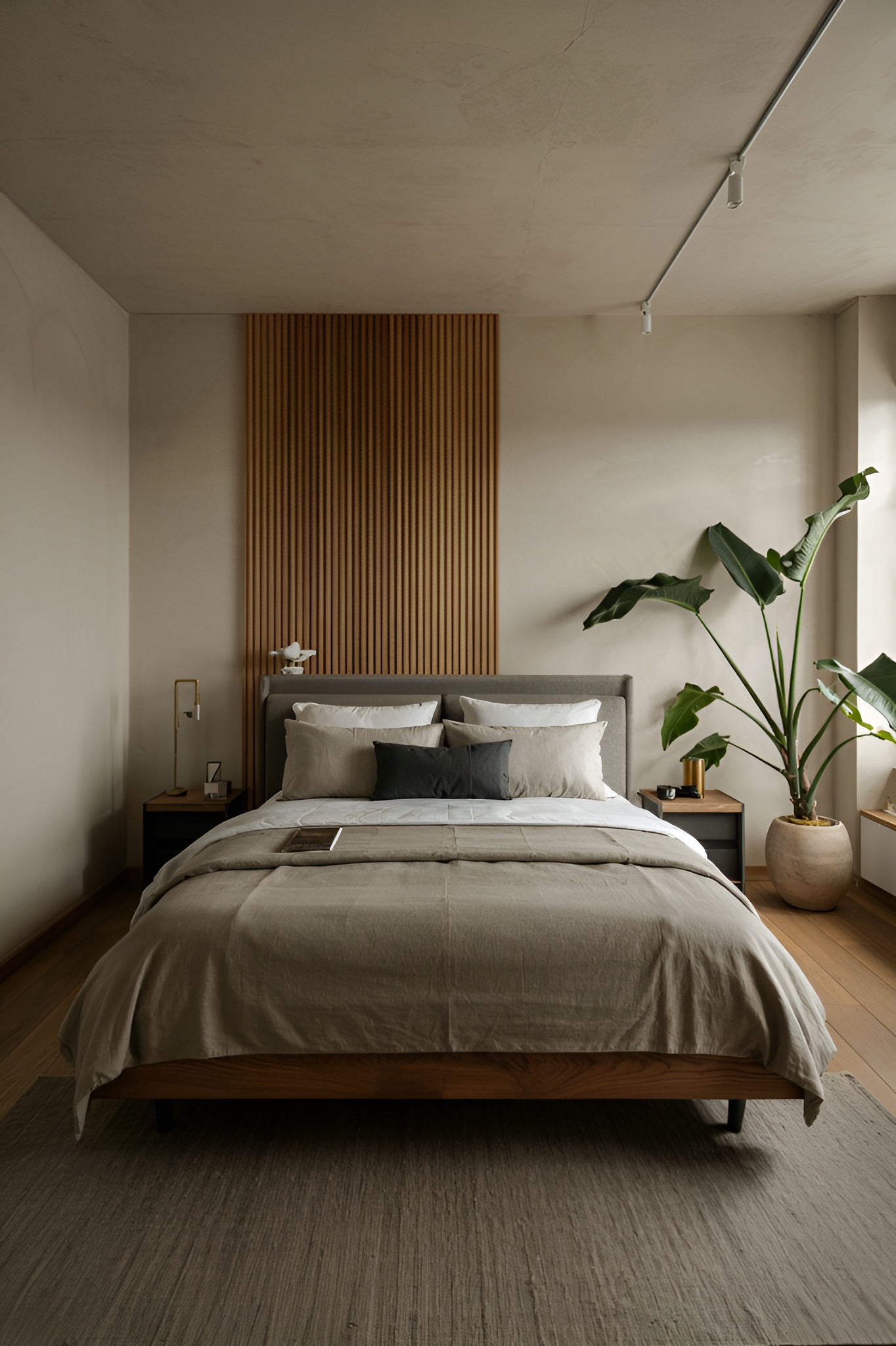
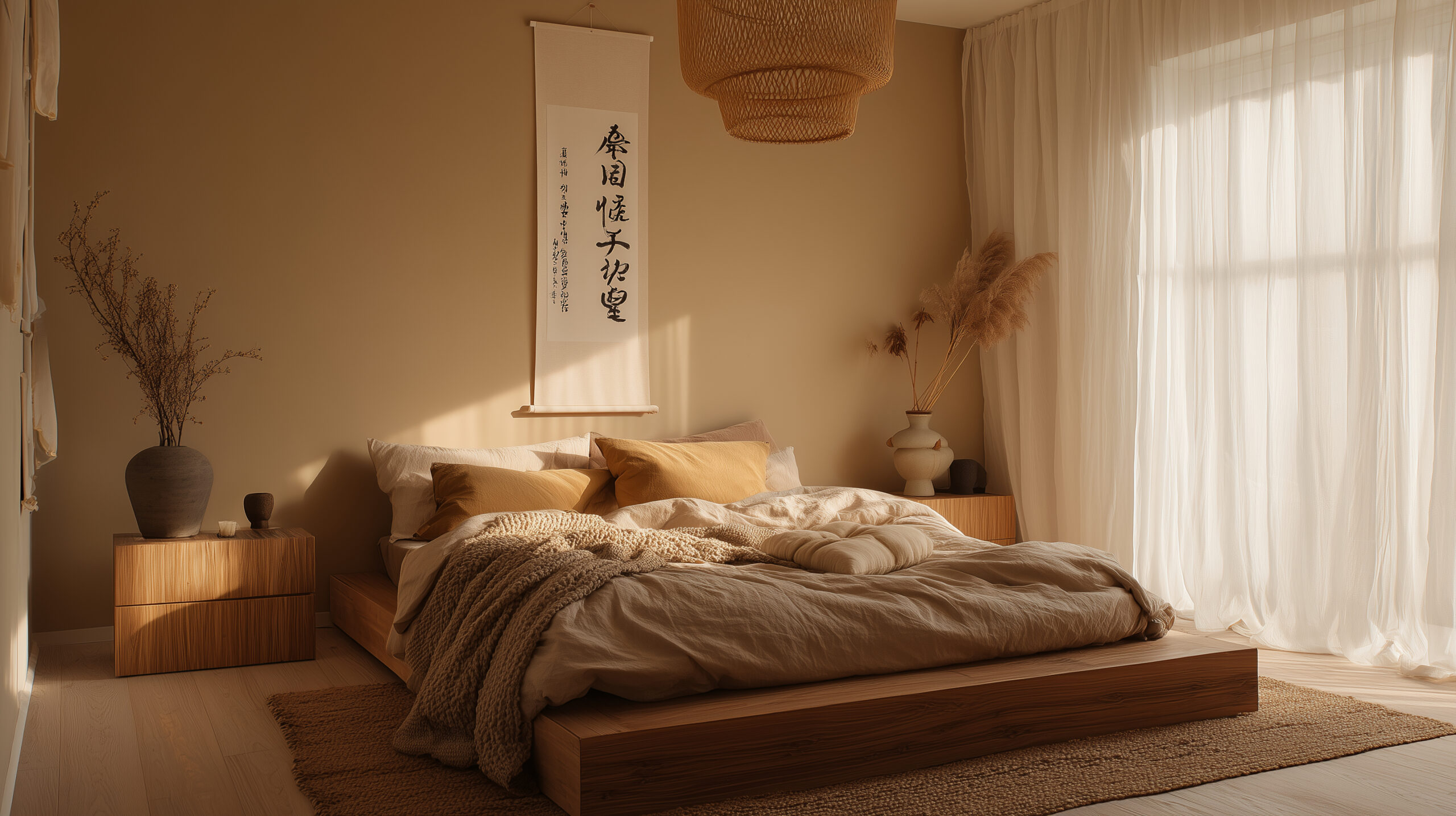
This room shows how a few elements can completely shape the mood. The linen bedding, woven rug, and soft natural light make the space feel restful and grounded. A ceramic vase and leafy plant add just the right amount of detail without overwhelming the simplicity.
This section contains affiliate links, which means I may earn a commission if you purchase through them, at no extra cost to you:
Shop the Look:
Bedding: Linen duvet cover set
Japandi Bedroom Layout: Creating a Natural Flow
The way a Japandi bedroom is arranged is just as important as the furniture itself. Instead of filling every corner, the layout leaves space to breathe. The bed usually sits near natural light, often centered against a wall with matching or balanced tables on either side. This creates harmony and makes the room feel calm the moment you walk in.
Rugs are used to anchor the bed, grounding the layout and adding comfort. Corners that might otherwise feel empty are softened with a plant, a floor lamp, or a woven basket. The result is a layout that feels open and inviting, with everything in its place and nothing unnecessary.
Japandi Bedroom Walls: A Soft and Natural Backdrop
In Japandi design, the walls are never meant to be flashy. They act as a quiet backdrop that lets the rest of the room shine. Warm off-whites, soft beiges, and gentle grays work beautifully, especially when applied with a finish that adds depth, like limewash or plaster. These textures reflect light in a soft, natural way that makes the bedroom feel relaxed.
Wooden wall panels are another common feature, adding warmth and a subtle sense of structure. They bring rhythm to the room without needing extra decoration. Keeping the walls clean and simple also prevents the bedroom from feeling busy, allowing the furniture and textiles to set the tone instead.
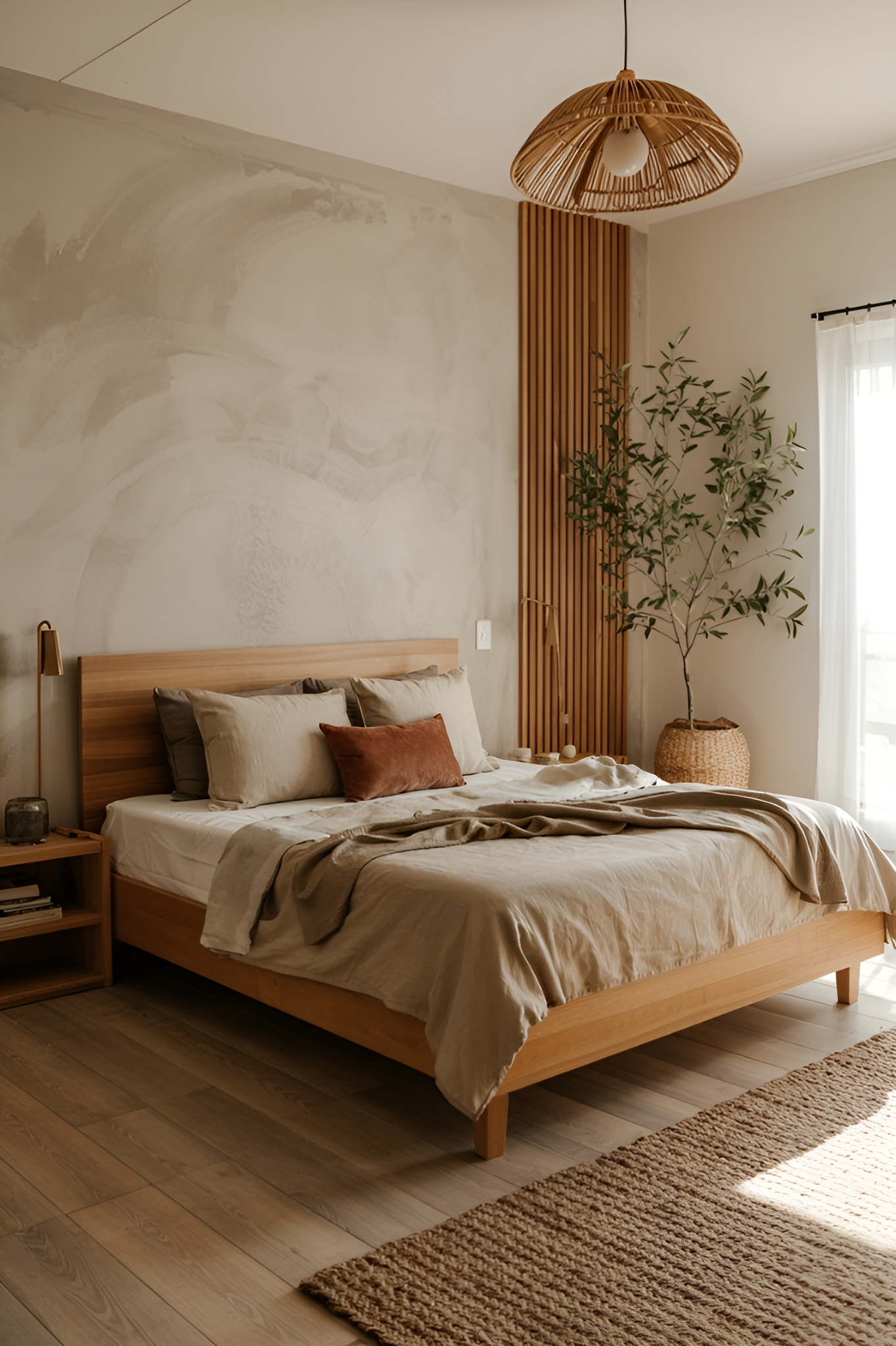
This bedroom uses wood slats behind the bed to create interest while staying true to the Japandi look. The wall feels textured and warm, yet the design remains clean and modern. A tall potted plant and layered bedding finish the look with ease.
This section contains affiliate links, which means I may earn a commission if you purchase through them, at no extra cost to you:
Shop the Look:
Bedding: linen duvet cover set
Small Japandi Bedroom: Making the Most of Limited Space
One of the reasons Japandi works so well is that it fits beautifully into small bedrooms. Its focus on simplicity means that even limited space can feel calm and uncluttered. Low-profile furniture creates the sense of openness, while soft neutral colors bounce natural light around the room.
In smaller spaces, storage is often built into the furniture itself: under-bed drawers, slim shelves, or nightstands with hidden compartments. Instead of many decorative items, a single plant or textured rug can bring the space to life. This careful editing makes a small bedroom feel bigger, while still keeping the cozy and inviting atmosphere that defines Japandi.
Japandi Bedroom Furniture: Simple Pieces with Lasting Style
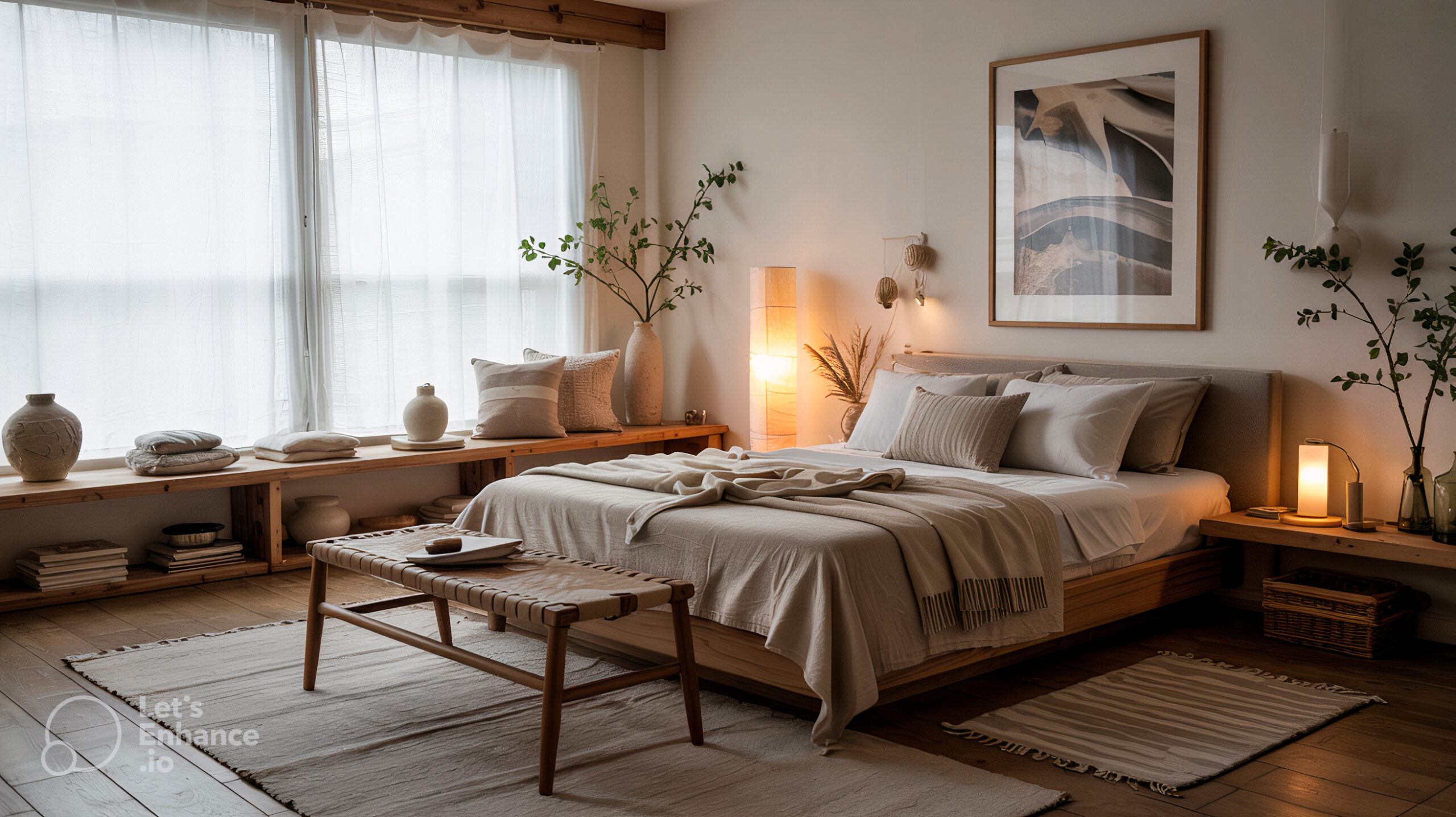
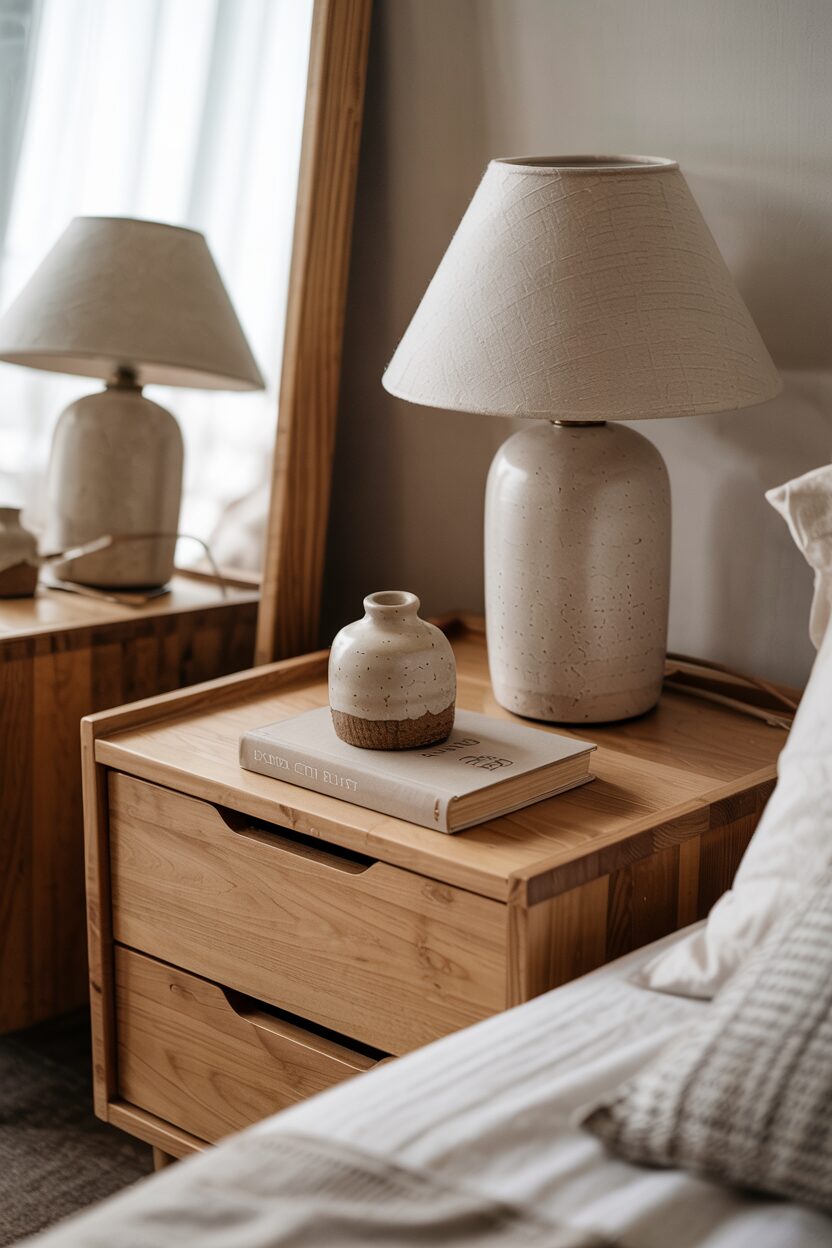
Furniture is the heart of a Japandi bedroom. Each piece is chosen with purpose: not too much, not too little. The bed usually sets the tone: low to the ground, made from natural wood, and dressed in soft, layered textiles. Nightstands are clean and minimal, often crafted from the same type of wood for harmony.
Storage is kept as simple as possible, with slim dressers or wardrobes that blend into the room. Instead of bulky, decorative items, Japandi bedrooms rely on a few timeless pieces — a wooden bench, a woven chair, or a simple lamp — that combine function with beauty. This approach makes the room feel open and uncluttered while still warm and inviting.
This section contains affiliate links, which means I may earn a commission if you purchase through them, at no extra cost to you:
Shop the Look:
Things to Know: Common Japandi Bedroom Questions
People often ask how to start creating a Japandi bedroom. The answer is simple: clear the clutter, then bring in a neutral color palette with natural textures. Add a low wooden bed, layer it with linen, and bring in greenery or ceramics for softness.
Color is another big question. Japandi bedrooms rely on earthy tones like sand, beige, cream, and gray, sometimes with deeper shades like charcoal or terracotta to add depth. These shades are timeless, so they won’t go out of style quickly.
Many also wonder if Japandi works in modern apartments. The answer is yes. The clean lines and minimal approach are perfect for smaller urban spaces. And while the look can seem expensive, it doesn’t have to be. By investing in a few quality basics and mixing them with budget-friendly accents, you can achieve a Japandi bedroom without overspending.
Conclusion
A Japandi bedroom is more than just a design trend — it’s a way to bring calm and balance into everyday life. By combining the best of Japanese minimalism and Scandinavian warmth, it creates a bedroom that feels restful, stylish, and timeless.
What makes Japandi so appealing is its flexibility. You can start small, perhaps with a new rug, a piece of linen bedding, or a wooden nightstand, and gradually layer in other elements as your budget allows. Each step makes your space feel more serene and complete.
In the end, Japandi proves that luxury isn’t about spending more — it’s about creating a room where every detail feels intentional, natural, and comforting. It’s about giving yourself a space to breathe, rest, and truly feel at home.