This post contains affiliate links. If you purchase through these links I may earn a small commission at no extra cost to you.
There is a reason your bedroom rarely feels like the retreat you want it to be. It is not the size. It is not the budget. It is the feeling that everything in the room is either too cold, too busy, or just slightly off — and you cannot quite put your finger on why.
Japandi design fixes this. A quiet fusion of Japanese wabi-sabi and Scandinavian hygge, it is the rare aesthetic that is both visually striking and genuinely restful. No cold minimalism. No cluttered cosiness. Just warmth, intention, and natural beauty — in perfect balance.
This guide will show you exactly how to get there.
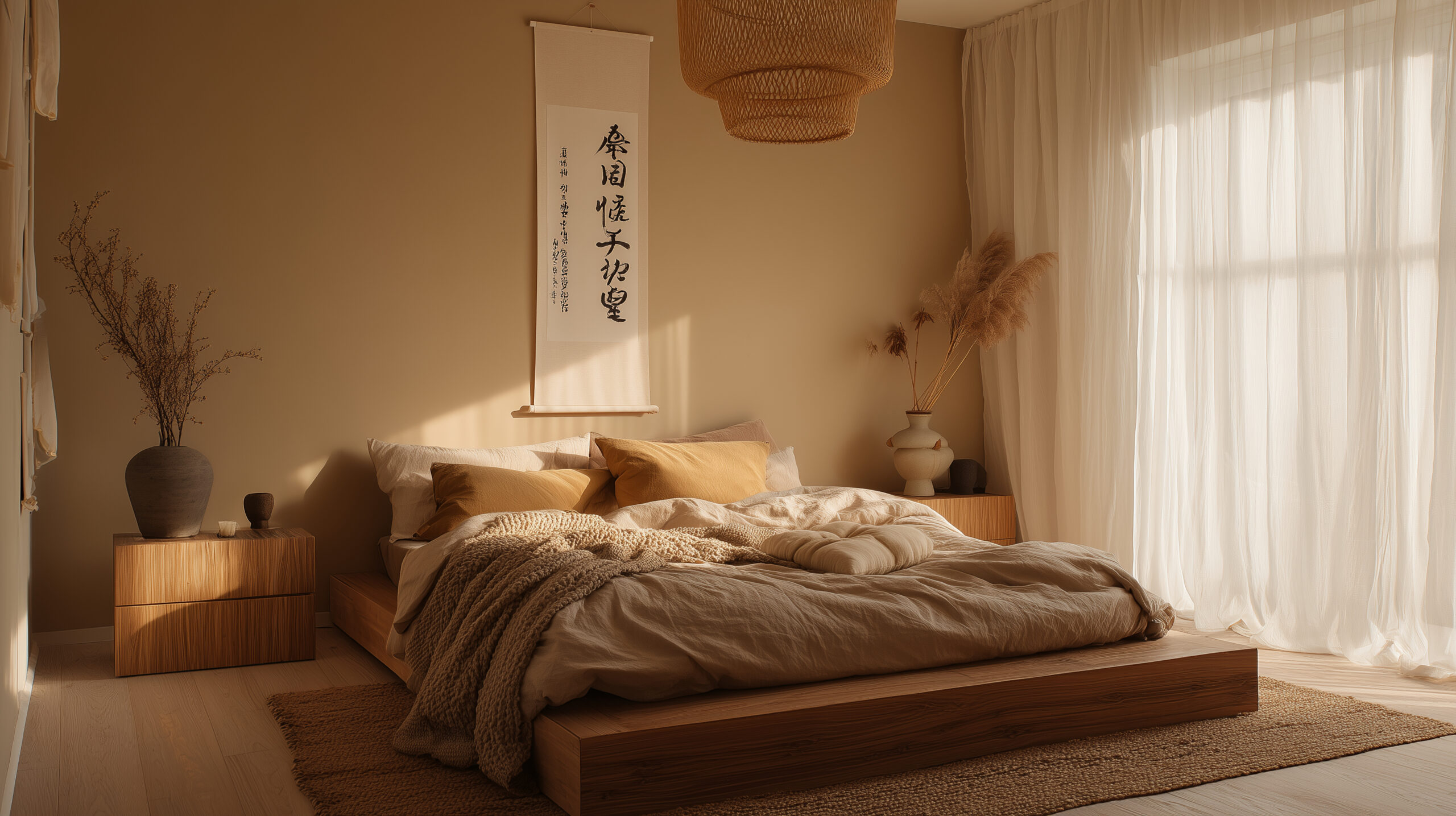
Shop the Look:
Bedding
Throw blanket
Rattan pendant lamp
Ceramic vase
Rug
Dried plants
What Is Japandi — and Why Does It Work So Well in a Bedroom?
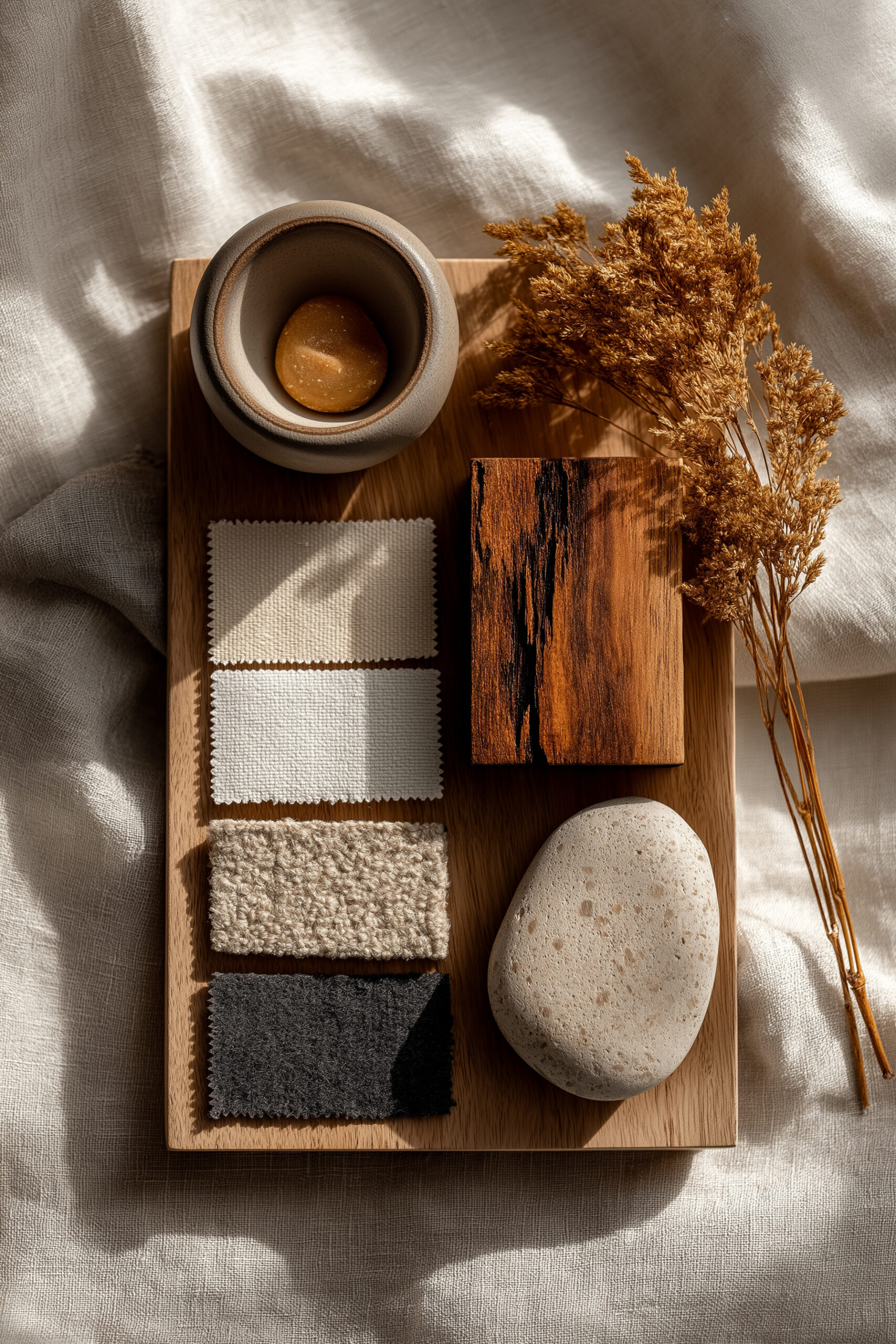
Japandi is not a trend. It is the natural overlap between two cultures that have always shared the same core values: respect for natural materials, belief in the beauty of simplicity, and the understanding that a well-designed space changes how you feel inside it.
Japanese design brings wabi-sabi — the acceptance of imperfection, the beauty of worn wood and handmade objects. Scandinavian design brings hygge — warmth, comfort, the feeling of being deeply at ease. Together they create something neither achieves alone: a space that is calm without being cold, minimal without being empty.
The bedroom is where Japandi makes the most sense. Sleep research consistently shows that calm, uncluttered environments improve rest. Japandi’s warm neutrals, natural textures and deliberate negative space create exactly those conditions — which means designing a Japandi bedroom is not just an aesthetic choice. It is a practical one.
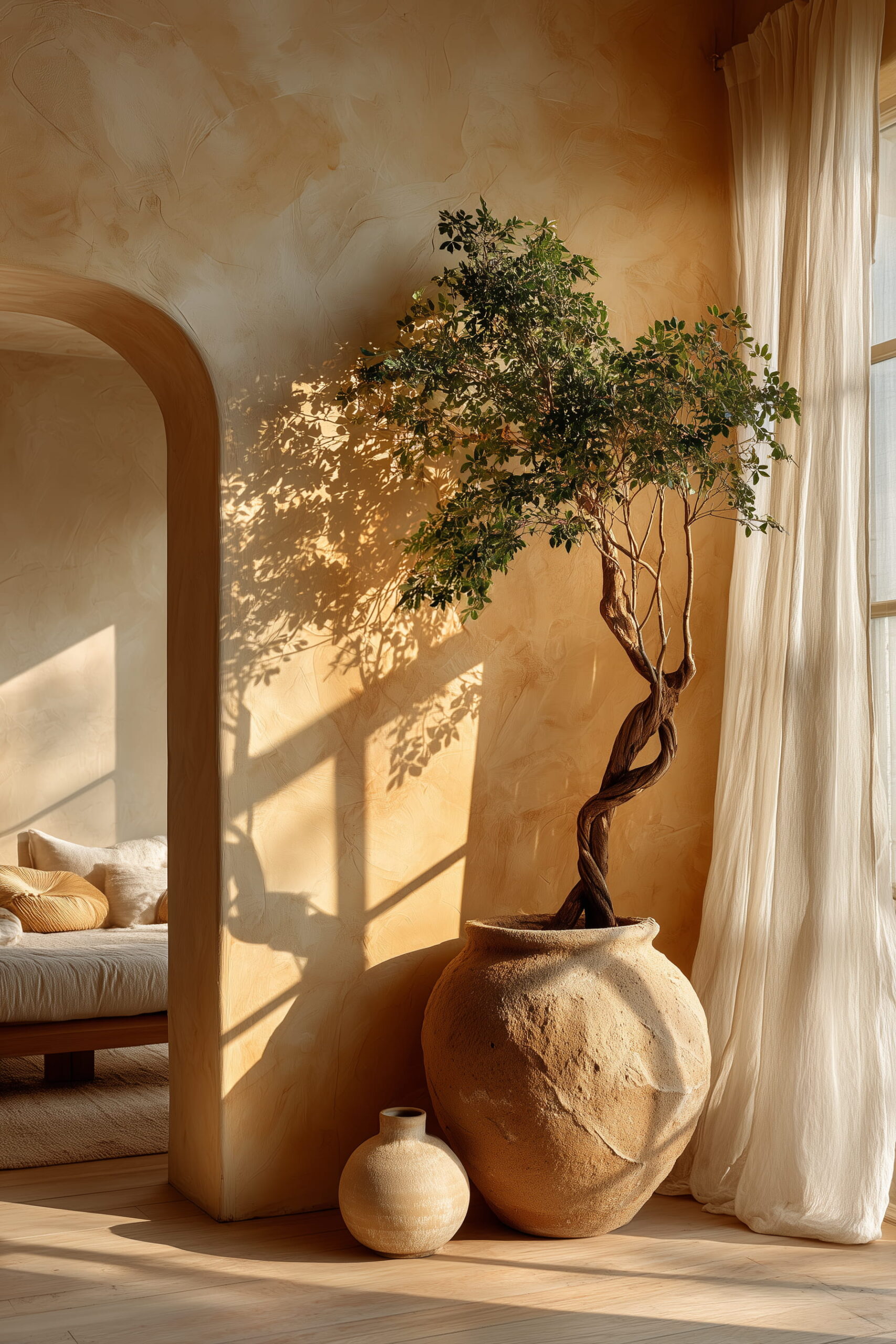
Shop the Look:
Large ceramic vase
Indoor faux olive tree
Sheer linen curtain
The Six Elements of a Japandi Bedroom
1. A warm, earthy colour palette
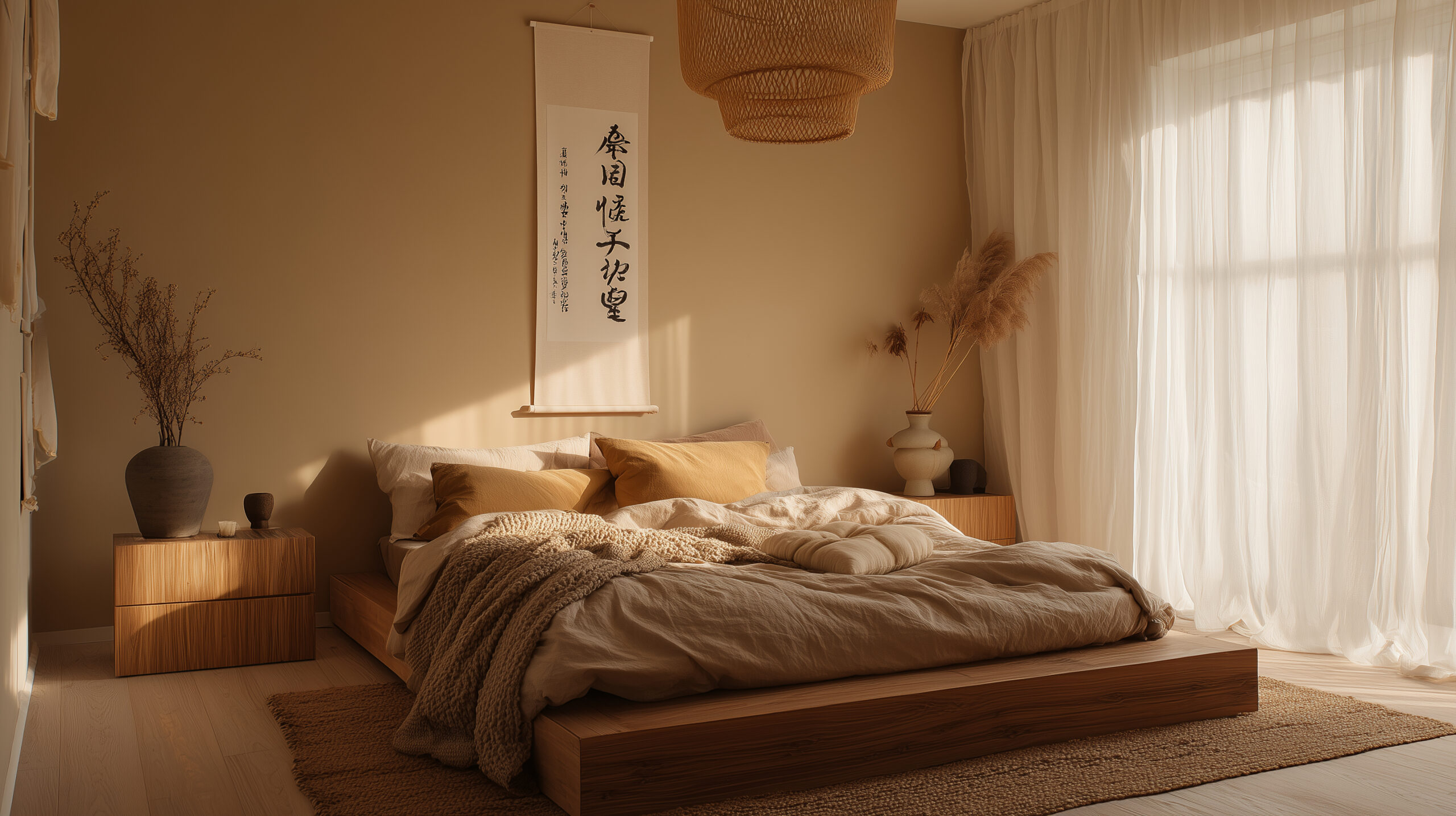
Start with your walls. Japandi colour is warm, never cool — think sandy beige, raw linen, warm white with a cream undertone. Never bright white. Never grey. These are the tones that make a room feel held rather than exposed.
Your palette needs three layers: one dominant neutral for walls and large surfaces, one mid-tone for textiles, and one dark anchor — deep walnut, charcoal, or muted black — for furniture and accents. Add a single note of dusty sage or warm olive through a plant or a cushion, and the palette is complete.
2. A low platform bed
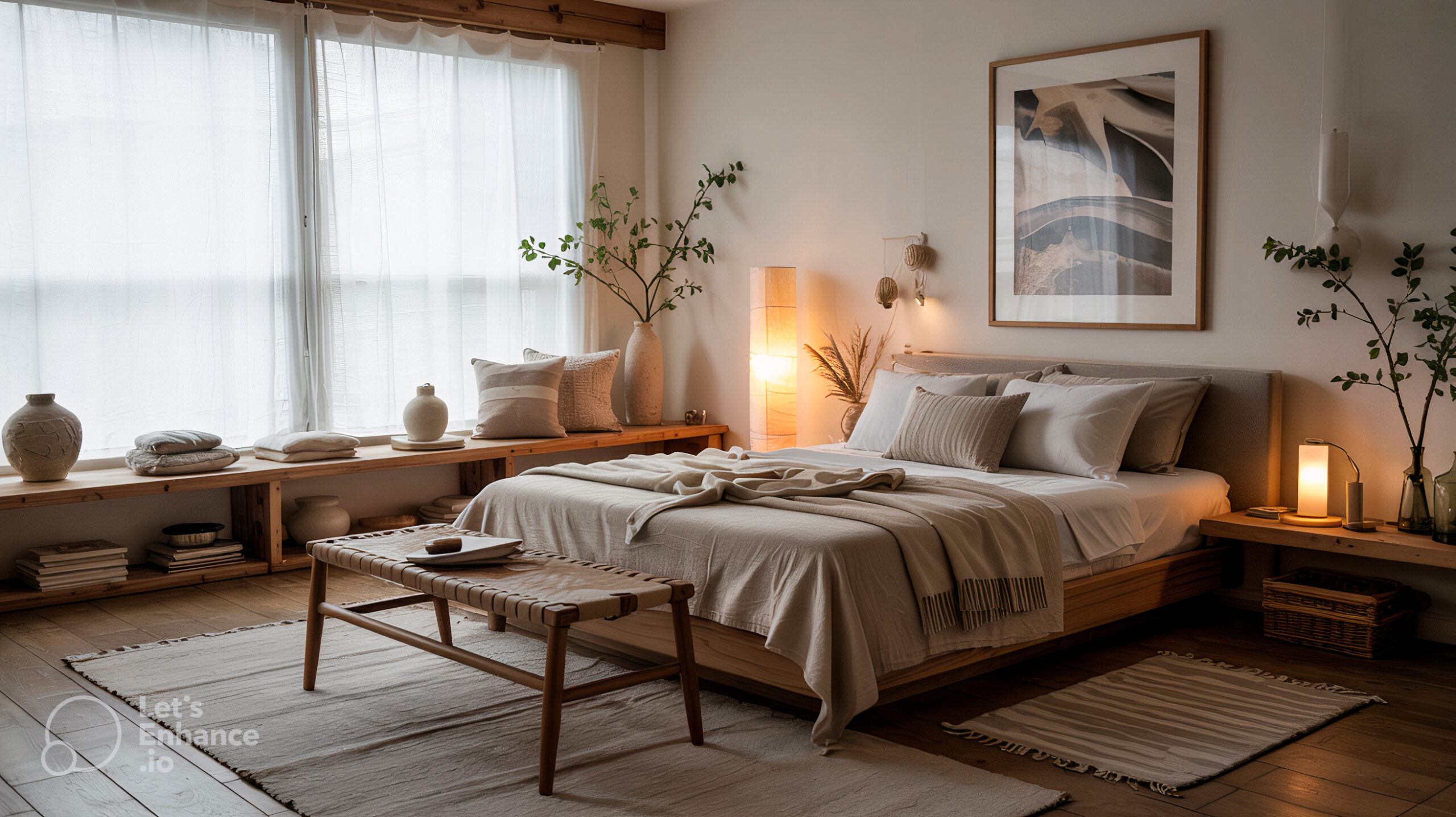
The bed is the room. Everything else serves it. In Japandi, the bed sits low — a platform frame in smooth walnut or warm oak, with clean straight lines and no ornament. The visual effect is immediate: the room feels taller, calmer, more grounded.
Dress it in stonewashed linen in oat or warm sand. Layer one knit or boucle throw at the foot. Add two or three pillows in tonal neutrals — nothing patterned, nothing bright. The bed should look like something you would photograph, but also something you cannot wait to fall into.
3. Natural materials only
Japandi has a strict material hierarchy: wood, linen, rattan, stone, ceramic. That is the list. Polyester bedding, plastic storage, laminate furniture — these do not belong in a Japandi bedroom, not because of aesthetics alone, but because they contradict the philosophy. Japandi is honest about what things are made of. A linen pillowcase feels different from a synthetic one. A ceramic lamp base feels different from a resin one. These differences matter.
4. One considered natural element
Not a shelf of succulents. Not a corner full of pots. One plant — large, sculptural, chosen with intention. A fiddle leaf fig, a monstera, a twisted olive tree. Something with presence. Place it where the light hits it and the shadow it casts becomes part of the room.
Beside it, one object. A stone, a ceramic vessel, a branch. The wabi-sabi principle of singularity: what you choose to keep matters more than how much you keep.
5. Layered warm lighting
This is the element most people get wrong, and it is the one that makes the biggest difference. A single overhead light — regardless of the shade — cannot create the atmosphere a Japandi bedroom needs. You need layers.
A rattan or washi paper pendant for ambient light. A small bedside lamp with a warm bulb — 2700K, no cooler — for reading and wind-down. A hidden LED strip behind the headboard for the softest possible background glow. Light all three simultaneously in the evening and the room transforms completely.
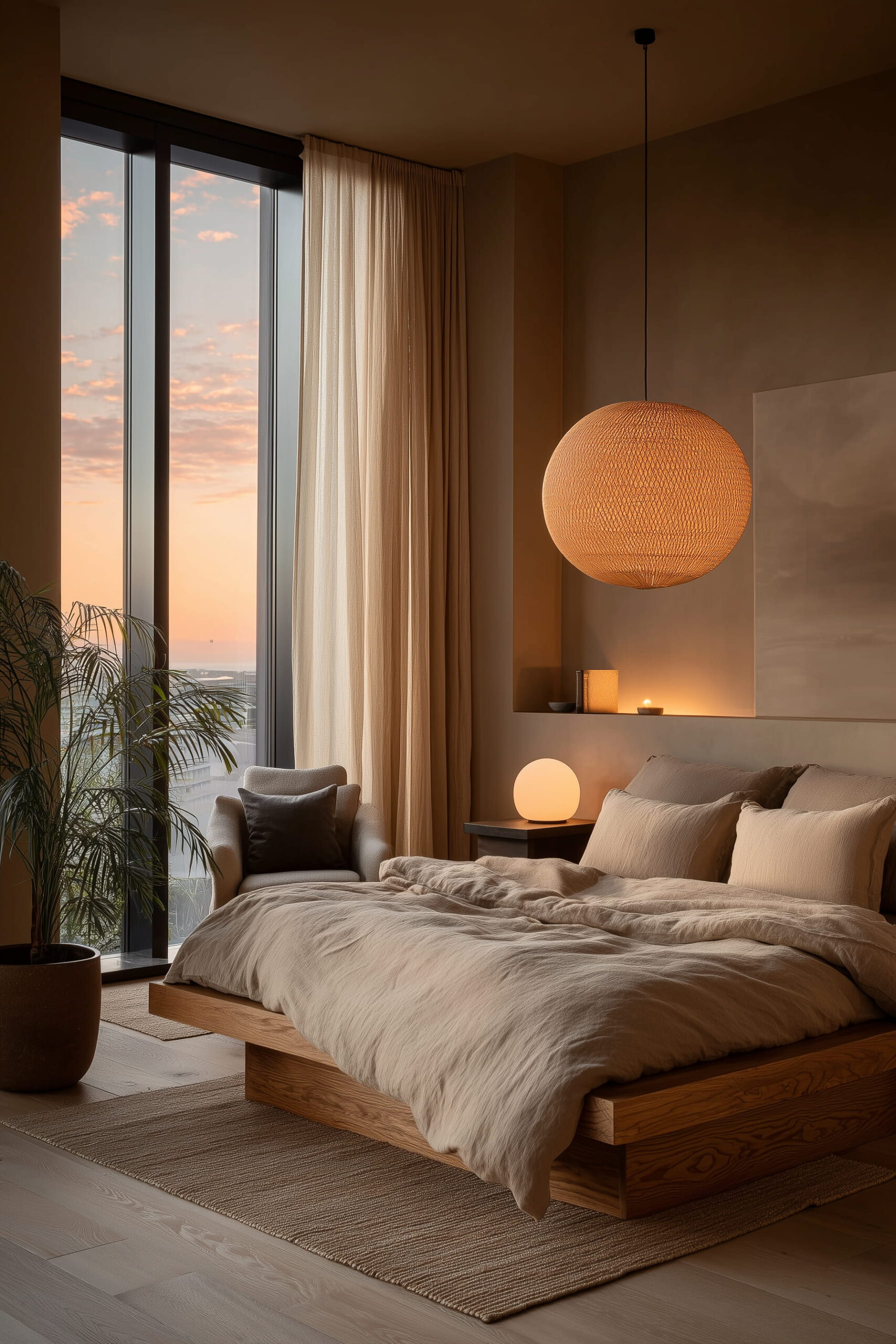
Shop the Look:
Linen bedding
Rug
Rattan pendant lamp
Globe bedside lamp
Linen curtains
Bedside table
Armchair
Plant
6. Deliberate storage and clear surfaces
A Japandi bedroom with cluttered surfaces is not a Japandi bedroom. Every object on display should be either useful or genuinely beautiful — and ideally both. Everything else lives behind flat-front wardrobe doors, in drawers, or simply elsewhere.
The standard: no surface should hold more than three objects. A lamp, a ceramic, a book. That is the ceiling, not the target.
The Three Mistakes That Undo Everything
Going too cold. The single most common error. Japandi is warm minimalism — the moment your whites turn bright and your wood turns blonde, you have crossed into Scandinavian territory. Warm undertones in everything, always.
Mixing too many wood tones. Pick one — walnut, warm oak, or ash — and stay consistent throughout the room. Two wood tones is the maximum. Three creates visual noise that works directly against the calm you are building.
Over-accessorising. Japandi rewards restraint. The instinct to add one more object, one more plant, one more cushion is the instinct to resist. When the room feels almost empty, you are probably close.
Where to Start This Weekend
You do not need a renovation. You need three changes, in this order:
- Replace your bedding with stonewashed linen in a warm neutral — this single change will shift the feel of the room more than almost anything else.
- Swap your bulbs for 2700K warm white throughout — immediately warmer, immediately more atmospheric, and it costs almost nothing.
- Clear every surface down to three objects maximum — do it before you buy anything new.
These three changes take one afternoon. The room will feel different by evening.
Conclusion
A Japandi bedroom is not a style you achieve by shopping. It is a result of choosing carefully, removing generously, and trusting that less — done well — is always more. Warm walls, natural materials, one beautiful plant, and light that makes you want to stay. That is all it takes.
FAQ
What colours work in a Japandi bedroom? Warm white, raw linen, sandy beige, warm walnut and dusty sage. The palette is always warm-toned — never cool grey, never bright white, never blue.
Is Japandi the same as minimalism? Not exactly. Japandi shares minimalism’s preference for uncluttered spaces but adds warmth, texture and natural materials. A minimalist bedroom can feel stark. A Japandi bedroom should feel calm and lived-in.
Can I achieve Japandi on a budget? Yes. Start with linen bedding, warm bulbs and cleared surfaces — three changes that cost very little and make an immediate difference. Add furniture gradually as your budget allows.